
In the world of material handling and logistics, efficiency is the currency of success. While there are numerous ways to move heavy goods across a warehouse floor, few tools are as indispensable and reliable as the hydraulic pallet truck. Often referred to as the workhorse of the industry, this manual device leverages the principles of Pascal’s Law to allow a single operator to lift and transport thousands of pounds with minimal physical exertion. Understanding the mechanics, maintenance, and strategic use of these machines is vital for any business looking to streamline its operations and protect its bottom line.
The core of this machine’s capability lies in its sophisticated lift mechanism. A hydraulic hand pallet truck is not merely a frame with wheels; it is a precision-engineered tool designed to withstand immense pressure. For warehouse managers and business owners, the choice of a pallet truck often comes down to the reliability of its hydraulic system. Whether you are navigating narrow aisles or loading heavy shipping containers, the smooth operation of your equipment determines your daily throughput.
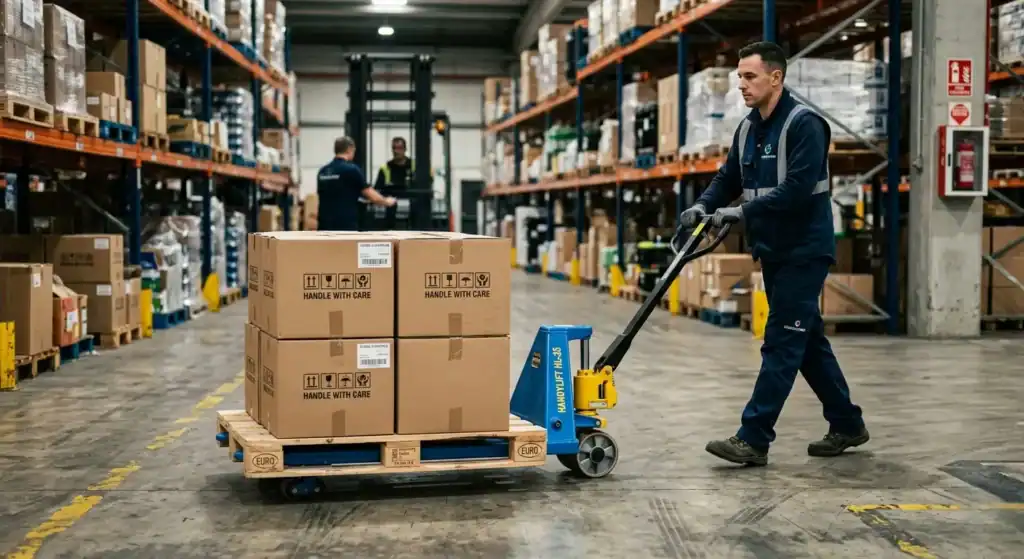
The Heart of the Machine: The Pallet Truck Hydraulic Pump
If the frame of the truck is its skeleton, then the pallet truck hydraulic pump is undoubtedly its heart. This component is responsible for converting the mechanical energy of the operator’s pumping motion into hydraulic pressure. Inside the pump, a piston moves within a cylinder, forcing hydraulic fluid through a series of valves. When you pull the handle down, the fluid is pushed into the main lifting cylinder, raising the forks.
A high-quality hydraulic pump is what differentiates a premium pallet truck from a budget model. Premium pumps are often cast in a single piece to prevent leaks and integrated with an overload bypass valve to ensure safety. When the pump is functioning correctly, the lifting motion should be smooth and require consistent effort. However, if the pump feels “spongy” or fails to reach its full height, it is often a sign that air has entered the system or that the internal seals are beginning to wear. Maintaining this component is the single most important factor in extending the lifespan of your material handling equipment.
The Role of Pallet Truck Hydraulic Oil
To keep the pump and cylinders operating at peak performance, the choice and condition of the pallet truck hydraulic oil are paramount. Hydraulic oil serves multiple purposes: it transmits power, lubricates moving parts, and helps dissipate heat generated by friction. Over time, this oil can become contaminated with dust, metal shavings, or moisture, which can lead to internal corrosion and pump failure.
Selecting the correct grade of oil is essential. Most standard pallet trucks require a high-grade ISO VG 32 or 46 hydraulic oil. Using the wrong viscosity can lead to sluggish performance in cold environments or insufficient lubrication in high-temperature warehouses. Regularly checking the oil level and performing a complete oil flush every year is a best practice followed by top-tier logistics companies. When the oil is clean and at the correct level, the hydraulic pallet truck operates with a level of precision that makes heavy lifting feel effortless.
Engineering Excellence in the Hydraulic Hand Pallet Truck
Beyond the pump and oil, the overall design of a hydraulic hand pallet truck must prioritize ergonomics and durability. The handle, which serves as the primary interface between the worker and the machine, must be designed to reduce fatigue. Modern designs often feature a three-position control lever—lift, neutral, and lower. The “neutral” position is particularly important; it disengages the pump from the lifting mechanism, allowing the operator to steer and move the load without the resistance of the hydraulic system, thereby reducing physical strain.
Furthermore, the construction of the chassis and forks must be robust enough to handle the rated capacity without flexing. Reinforced steel, high-quality polyurethane wheels, and lead-in rollers are all features that contribute to the “hydraulic” experience. When these elements work in harmony with the hydraulic system, the result is a tool that enhances safety and productivity simultaneously.
Troubleshooting and Technical Nuances
Even the most durable pallet truck hydraulic systems encounter issues after years of heavy use. One of the most common problems is the “failed lift,” where the forks do not rise despite pumping. This is usually caused by an air lock in the hydraulic circuit. Fortunately, this is often an easy fix: simply holding the release lever in the “down” position while pumping the handle rapidly several times will typically “bleed” the air out of the system and restore pressure.
For more complex issues, such as external leaks around the pump piston, it may be necessary to replace the O-rings and seals. This is a task that requires precision but can be done in-house with a basic seal kit. By understanding the pallet truck hydraulic architecture, maintenance teams can perform these repairs quickly, minimizing downtime and avoiding the cost of a full replacement.
Strategic Sourcing and Global Export Trends
As a business owner in the pallet truck industry, it is important to recognize that the global market for hydraulic pallet trucks is evolving. Buyers are increasingly looking for specialized solutions, such as galvanized models for cold storage or high-lift versions for ergonomic workstations. For those operating B2B e-commerce platforms, providing detailed technical specifications about the hydraulic pump brand, the type of oil used, and the load-testing certifications is the key to building trust with international clients.
In regions with strict labor safety laws, the emphasis is shifting toward pallet trucks that offer “quick-lift” features—where the pallet is cleared from the floor in just two strokes. This is another area where hydraulic innovation plays a central role. By highlighting these technical advantages in your marketing content, you position your brand as a leader in the manual handling space.
FAQ: Expert Insights on Hydraulic Pallet Systems
What is a hydraulic pallet truck? A hydraulic pallet truck is a manual material handling tool used to lift and move pallets. It uses a hydraulic pump system to raise the forks off the ground, allowing heavy loads to be transported easily over flat surfaces. It is the most common tool in warehouses worldwide due to its simplicity and effectiveness.
How do I put together my Roughneck high-lifting hydraulic pallet truck? Assembling a Roughneck high-lifting model usually involves attaching the handle to the pump base. First, remove the axle pin from the handle base. Align the handle holes with the pump base and re-insert the pin. Next, thread the release rod (the chain) through the center hole of the axle and hook it onto the lever plate. Ensure the chain has enough tension to trigger the release valve but isn’t too tight to prevent lifting. Always perform a test lift without a load first to ensure the hydraulic circuit is synchronized.
Tell me about the Jadever JIK-6CAB oil hydraulic hand pallet truck scale. The Jadever JIK-6CAB is a specialized hybrid that integrates a high-precision weighing scale into a standard oil hydraulic hand pallet truck. This allows businesses to weigh their goods while they are being moved, eliminating the need for a stationary floor scale. It features a rugged load cell system and a digital indicator (JIK-6) that is protected against the vibrations and shocks of daily warehouse use. It is ideal for shipping departments that need to verify weights for freight billing.
How do I add or change the pallet truck hydraulic oil? To add oil, lower the forks completely and place the truck on its side. Locate the oil reservoir plug on the pump housing. Remove the plug and fill with ISO VG 32 hydraulic oil until the level reaches the bottom of the fill hole. To change the oil completely, you will need to drain the old fluid from the same hole by tilting the truck, then refill with fresh oil. Always bleed the air out of the system after an oil change.
What are the signs of a failing pallet truck hydraulic pump? Common signs include the forks slowly drifting down after being raised (internal leak), oil visible on the exterior of the pump (seal failure), or the pump requiring more strokes than usual to reach maximum height (air in the system or low oil). Regular inspection of the pump’s “piston rod” for scratches or rust can also prevent premature seal failure.
 Spanish
  English
  German
  French
  Portuguese
  Japanese
  Hindi
Hindi  Urdu
Urdu  Chinese

